
About Author
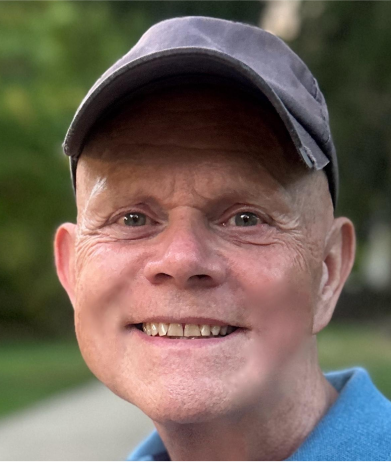
About the Author
I was born and reared in Augusta, Georgia, and lived there until I left for college. I pursued my education at the University of Alabama at Birmingham, where I earned my Bachelor of Science degree. After graduating, I was still unsure about my career path, so I returned home to Augusta and taught mathematics for three years. I enjoyed teaching and working with young people, but I had a much bigger ambition. While teaching, I met my wife, and we moved back to Alabama to pursue graduate studies. We both earned our Master’s degrees. During graduate school, I developed a strong interest in the psychology behind how we learn mathematics, as well as research, statistics, psychometrics, and educational psychology. My professors and dean encouraged me to pursue doctoral studies and were instrumental in helping me gain admission to Rutgers University.
We moved to New Jersey, which was a culture shock for us coming from Alabama. While there, I connected with major publishers in New York City and became involved in writing and editing textbooks. I loved writing and developing creative educational materials for young children. However, I quickly learned that there is a significant difference between what we know about how children learn and what sells textbooks.
We returned to Georgia, where I taught at Augusta University and later at Georgia Southern University. By then, we had two children. Through my writing and research, I was recruited to work in the testing industry. We moved to Cleveland, and I worked for The Psychological Corporation, developing educational and psychological tests. While I enjoyed the challenging work, I remained passionate about creative writing for young children. Many of my book ideas came from working with my own children. Math and science are challenging concepts for most people, not just children. I decided to write a picture dictionary for math and science aimed at young kids, but from a unique perspective. I researched the words and terms in math and science for young children and wrote detailed art specifications so the illustrator could bring the story to life. The idea behind the books was for parents and children to sit together, look at the pictures, and discuss what was happening in the images, which would define the words. It was a novel concept that had never been done before—and still hasn’t. I wrote First Math Dictionary and First Science Dictionary, which were also published in Spanish.
Due to their success, I wrote a series of 9 books titled Helping Your Child at Home with Mathematics. These books offered creative ways to teach children math using common household items. They were endorsed by the National PTA. A few years later, when my children were in religious education, I decided to apply the same concept to Catholic terms. Religious dogma can be difficult even for adults to comprehend. I met a nun who was also an artist, and together we wrote A Child’s First Catholic Dictionary. The book was published by Ave Maria Press at the University of Notre Dame and won first place the year it was published by the National Catholic Press. Now out of print, I was encouraged to create a revised edition and a Spanish version. With one billion Catholics worldwide, half of whom are Spanish-speaking, and the growing Hispanic population in the U.S., I decided to make the book more user-friendly and changed the title to My First Catholic Dictionary. It is a beautiful book where the pictures define the words.
Through my work and writings for prisoners’ children, I was invited by the Prisons Foundation and the National Endowment for the Arts to write a play about incarceration. While many understand the trauma of a loved one going to prison, few consider the stress families face when that person returns home—often for the second or third time. This overlooked issue became the focus of my play Homeward Bound, which explores a prisoner’s struggle to confront his unresolved flaws as he prepares to reunite with his wary wife and confused son. In 2009, the play was performed at the Kennedy Center for the Performing Arts in Washington, D.C.
Shortly after the book was published, tragedy struck our family, and we were separated for a long time. During that period, I finally came to terms with having been sexually assaulted as a child. As part of my healing process, I wrote An End to Silence: Help for Men Who Have Been Sexually Assaulted. This book is not a therapeutic guide but rather one that offers hope and suggestions for healing. It is written in an accessible way for victims and their advocates, emphasizing that healing from sexual assault is possible.
Because of my interest in children with special needs, I wrote a series of books for children of incarcerated parents. There are over two million children in the U.S. with a parent in prison—a significant social problem that is often overlooked. The U.S. has the highest incarceration rate in the world, and the children left behind face unique challenges. I wrote Kofi’s Mom, Doogie’s Dad, Where’s Dad? (a novel for children with a father in prison), and Two of Every Hundred. The title Two of Every Hundred reflects the statistic that, at the time, two out of every hundred children in the U.S. had a parent in prison. I also founded a nonprofit organization called Children Left Behind to advocate for these children. Over time, I expanded the organization’s scope to include all children who do not live with their birth families, such as foster children and children of deployed military personnel. The organization is now called Family Bridge Network (Family Bridge Network).
To advocate for the over 400,000 children in foster care in the U.S., I wrote three books for foster children. The idea for these books came from conversations with young prisoners, many of whom had grown up in eight or more foster homes and had no recollection of their childhood. I found this deeply saddening, so I wrote My Memory Book. The three books are age-appropriate and provide creative ways for children and their caregivers to record important events and memories while the child is unable to live with their birth family. This ensures those years and memories are not lost. Sadly, many children today do not grow up in stable families where an adult documents the important moments in their lives.
Because of my love for children’s literature and my desire to encourage young children to read, I wrote a series of books for young adult readers aged 11 to 14. The first book in the series, Doc and the Guardians of Destiny, is a fantasy novel that appeals to both children and adults. It is currently under consideration for a made-for-TV movie.
I am also developing a series of courses and programs for juveniles focused on creative problem-solving, as well as addressing antisocial and offending behaviors. These are part of a project I call Towards A New Beginning, which includes books and courses on life skills, social skills, self-confidence, relationships, self-management, and a journal for introspection.
I enjoy writing creative books for young people and adults who have faced adversity, as I and so many others have. I hope you enjoy reading my books as much as I enjoyed writing them. Please feel free to reach out to me—I’d love to hear your comments and suggestions!